Technology choices are easiest when the business problem is clear.
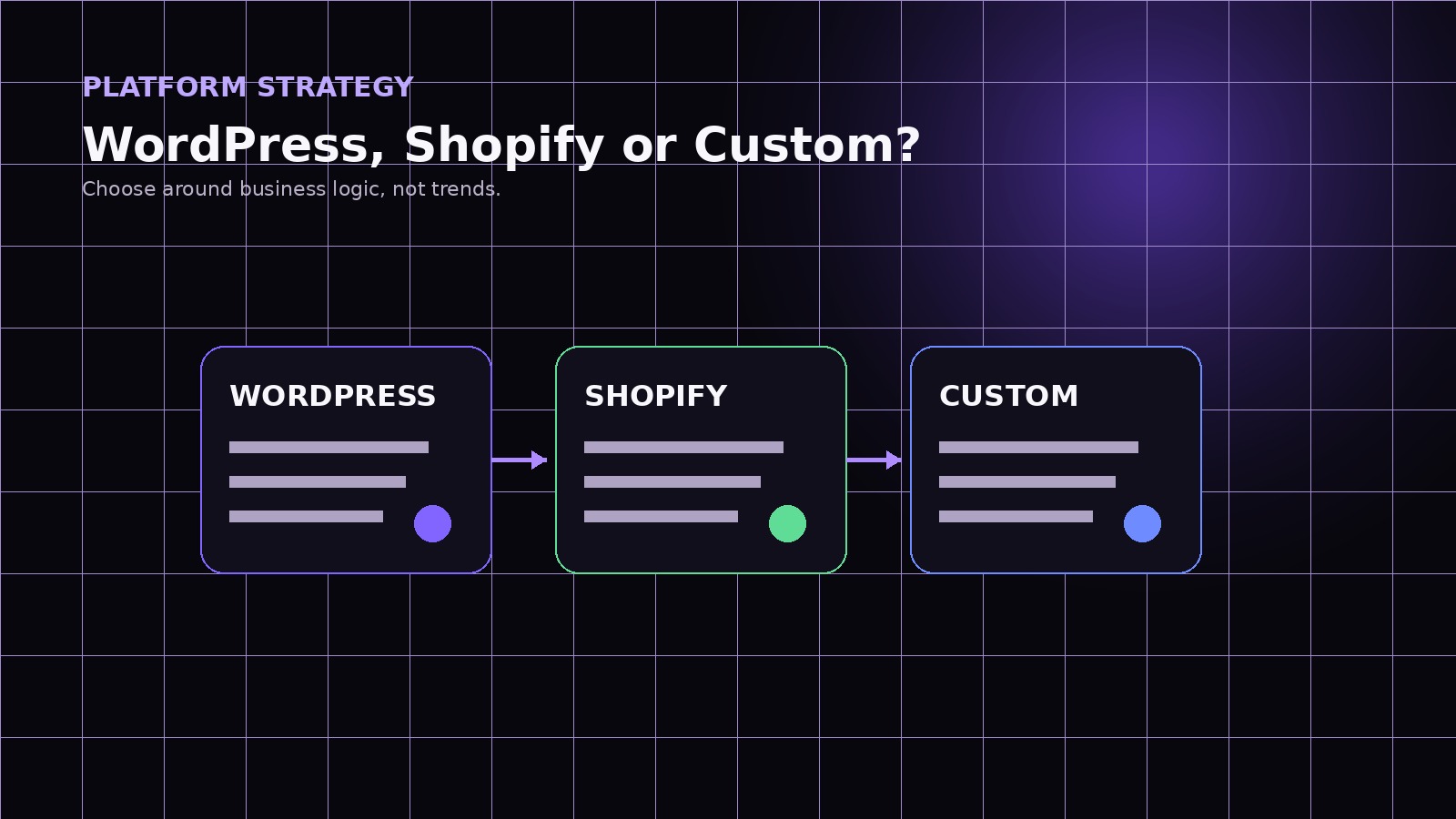
A company may ask whether it should use WordPress, Shopify or a custom web application, but the right answer is rarely based on which platform is more popular. The decision should come from how the business operates, what the customer journey needs to do, and how much flexibility the roadmap requires.
At KoderNext, this is the framework we use when advising businesses in the USA, Canada, the Middle East and other markets.
Start with the business model
Before discussing technology, we map the operation.
We look at questions such as:
- Is the website mainly content, commerce or a software product?
- Are the purchasing rules standard or highly customized?
- Does the platform need to connect with CRM, ERP, logistics or internal systems?
- Will different customer types see different pricing or workflows?
- How much control does the business need over hosting, code and data?
- How quickly does the first version need to launch?
- What is likely to change over the next two to three years?
A platform that fits the business model reduces workarounds later.
When WordPress is usually the right choice
WordPress is strongest when content, marketing and flexible website management are central to the product.
For a corporate website, publishing platform, membership experience or content-led commerce business, WordPress can provide a useful balance between editor control and developer flexibility.
WooCommerce extends that model into eCommerce. It becomes particularly valuable when the store needs custom checkout logic, unusual product structures, role-based pricing, integrations or content that plays a major role in conversion.
WordPress is often a good fit when:
- Marketing teams need control over content
- Custom plugins or workflows are required
- SEO and editorial flexibility are important
- The company wants more control over hosting and code
- Commerce requirements extend beyond a standard online store
The trade-off is operational responsibility. Hosting, plugin quality, updates and performance must be managed properly.
When Shopify is usually the right choice
Shopify is attractive when the business wants a managed eCommerce environment and the purchasing journey is relatively standard.
It removes much of the infrastructure work that comes with self-hosted platforms. The administration experience is consistent, the ecosystem is mature and many common retail workflows can be implemented quickly.
Shopify often makes sense when:
- Speed to market is a priority
- The store follows recognizable eCommerce patterns
- The team does not want to manage hosting
- Required functionality is available through Shopify or reliable apps
- The brand values predictable operations over deep backend freedom
The main question is how far customization may go. If the business depends on unusual pricing, complex operational logic or deep platform-specific workflows, app dependencies can grow quickly.
When custom development becomes the better option
Custom development is justified when the software itself is part of the competitive advantage.
A custom application can be appropriate for SaaS, marketplaces, booking systems, workflow products, customer portals, specialized B2B platforms and operations that cannot be expressed cleanly inside an existing CMS or commerce platform.
We start considering custom development when:
- Core workflows are unique to the business
- Multiple user roles have different permissions or journeys
- Existing platforms require too many workarounds
- Complex integrations are central to the product
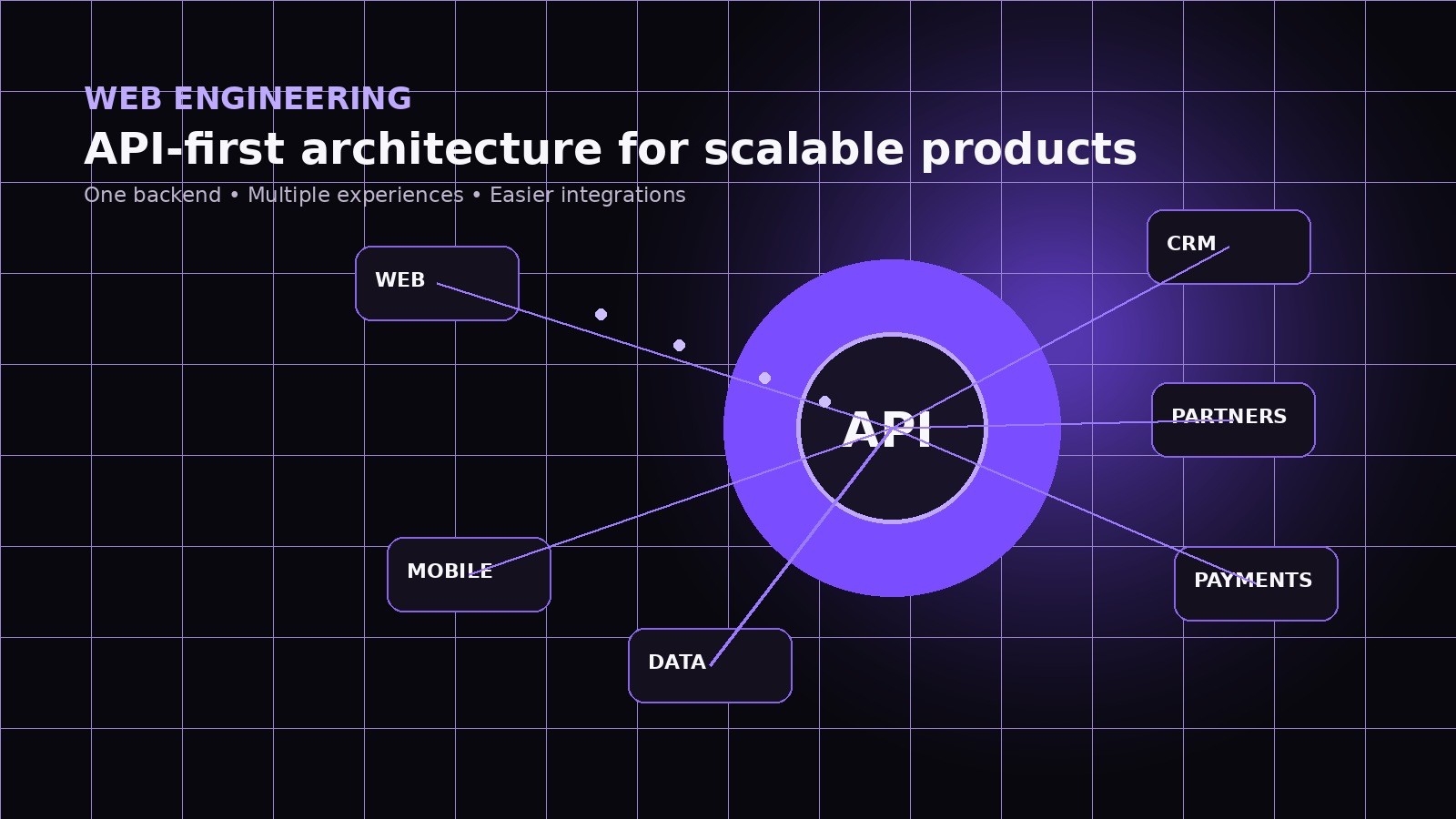
- The company expects mobile apps or partner APIs
- Data models and automation need more control
- The roadmap is product-driven rather than page-driven
Custom software requires a larger engineering commitment, but it can reduce long-term friction when the requirements genuinely justify it.
Regional considerations: USA, Canada and Middle East
The core technical decision is similar across markets, but operational details vary.
For businesses in the USA and Canada, we often see stronger emphasis on SaaS integrations, marketing automation, subscription billing, analytics and accessibility. For companies in the Middle East, projects may also need multilingual experiences, localized payments, region-specific logistics, VAT workflows or integrations with local systems.
These are not reasons to select one platform automatically. They are reasons to evaluate integrations and localization early.
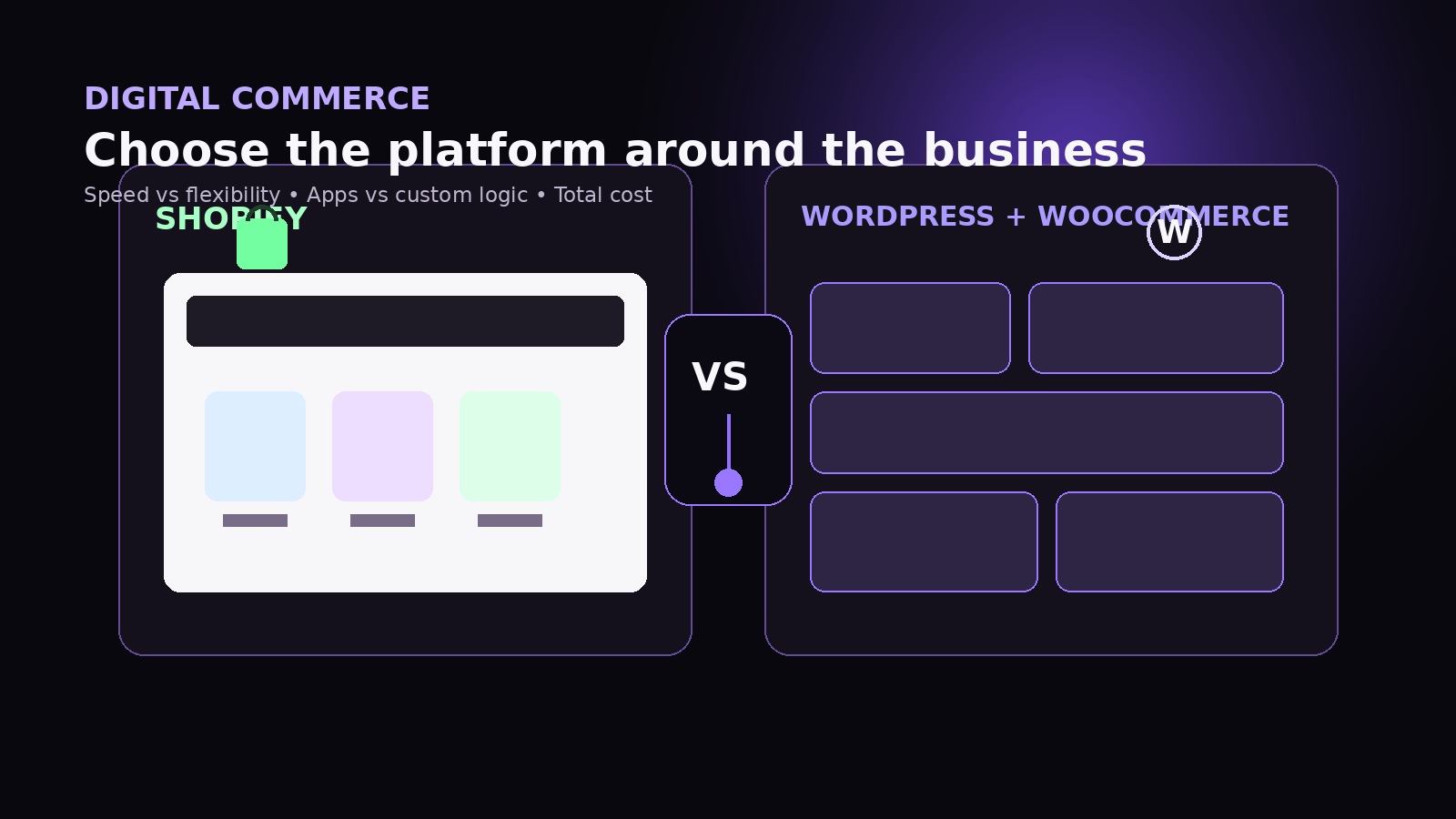
For example, a Shopify store targeting the GCC may be completely appropriate if the required payment and fulfillment workflows are supported. A WooCommerce implementation may be stronger when the business requires custom B2B pricing and Arabic content workflows. A custom platform may be justified when the operation combines booking, marketplace logic and internal approvals.
Do not optimize for the first month only
The fastest platform to launch is not always the cheapest platform to own.
A useful decision should consider:
- Initial development
- Third-party apps or plugins
- Hosting and infrastructure
- Internal administration
- Integration complexity
- Maintenance
- Future feature development
- Migration risk
If a business saves two weeks at launch but spends the next two years working around the platform, the original decision was not efficient.
Our rule: use the least complex platform that can support the roadmap
KoderNext does not recommend custom development simply because we can build it.
If WordPress solves the problem cleanly, we use WordPress. If Shopify gives the business everything it needs with lower operational overhead, we use Shopify. If the product requires workflows that standard platforms cannot support properly, we design custom software.
The goal is to choose the least complex technology that can support the business today and its most likely future requirements.
That is usually a more valuable question than asking which platform is “best.”