Choosing a software development partner is difficult because most proposals look similar.
Agencies list the same technologies, promise experienced developers and show polished portfolios.
The differences appear during delivery.
A good partner should reduce uncertainty, not simply supply code.
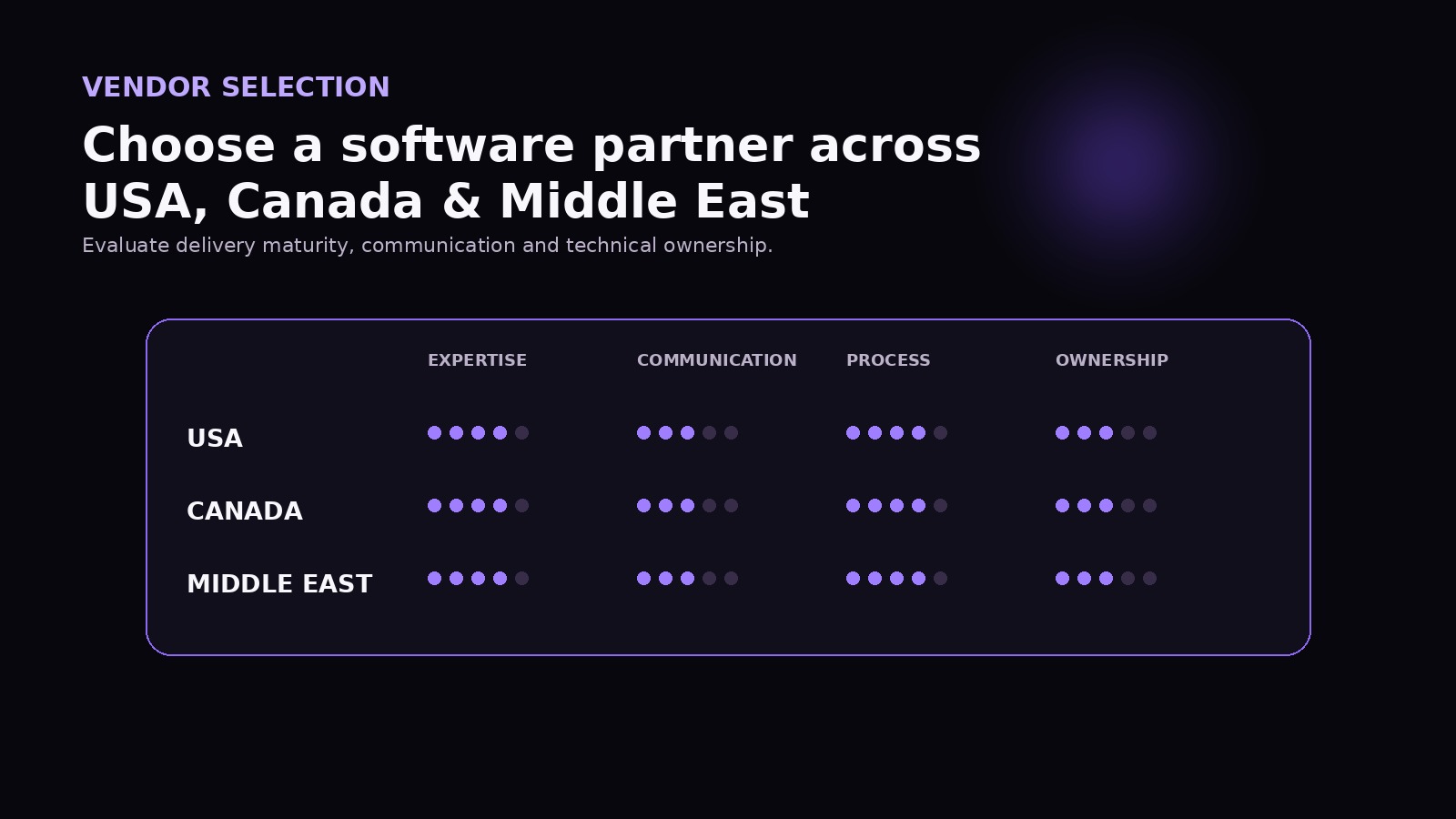
This is the checklist we recommend for businesses evaluating development companies in the USA, Canada, UAE, Saudi Arabia and wider Middle East.
1. Evaluate how they understand the problem
A strong technical team asks business questions before recommending technology.
They should want to understand:
- Who the users are
- What problem the product solves
- Which workflow is most important
- What systems already exist
- What the launch needs to achieve
- What can wait until later
If the vendor immediately recommends a platform without understanding the operation, the recommendation may be based on what they sell rather than what you need.
2. Ask who owns technical decisions
The people in the sales meeting are not always the people who design the system.
Understand who will make architecture decisions.
Ask:
- Will a senior engineer review the solution?
- Who chooses the stack?
- Who reviews integrations and security?
- How are difficult technical decisions escalated?
- How involved is the technical lead after kickoff?
Technical leadership has a large impact on long-term maintainability.
3. Review relevant work, not only attractive work
Portfolio relevance matters more than portfolio size.
A beautiful marketing website does not prove that a team can build a multi-role SaaS platform.
Look for experience related to the challenge:
- Complex WooCommerce customization
- SaaS architecture
- Mobile applications
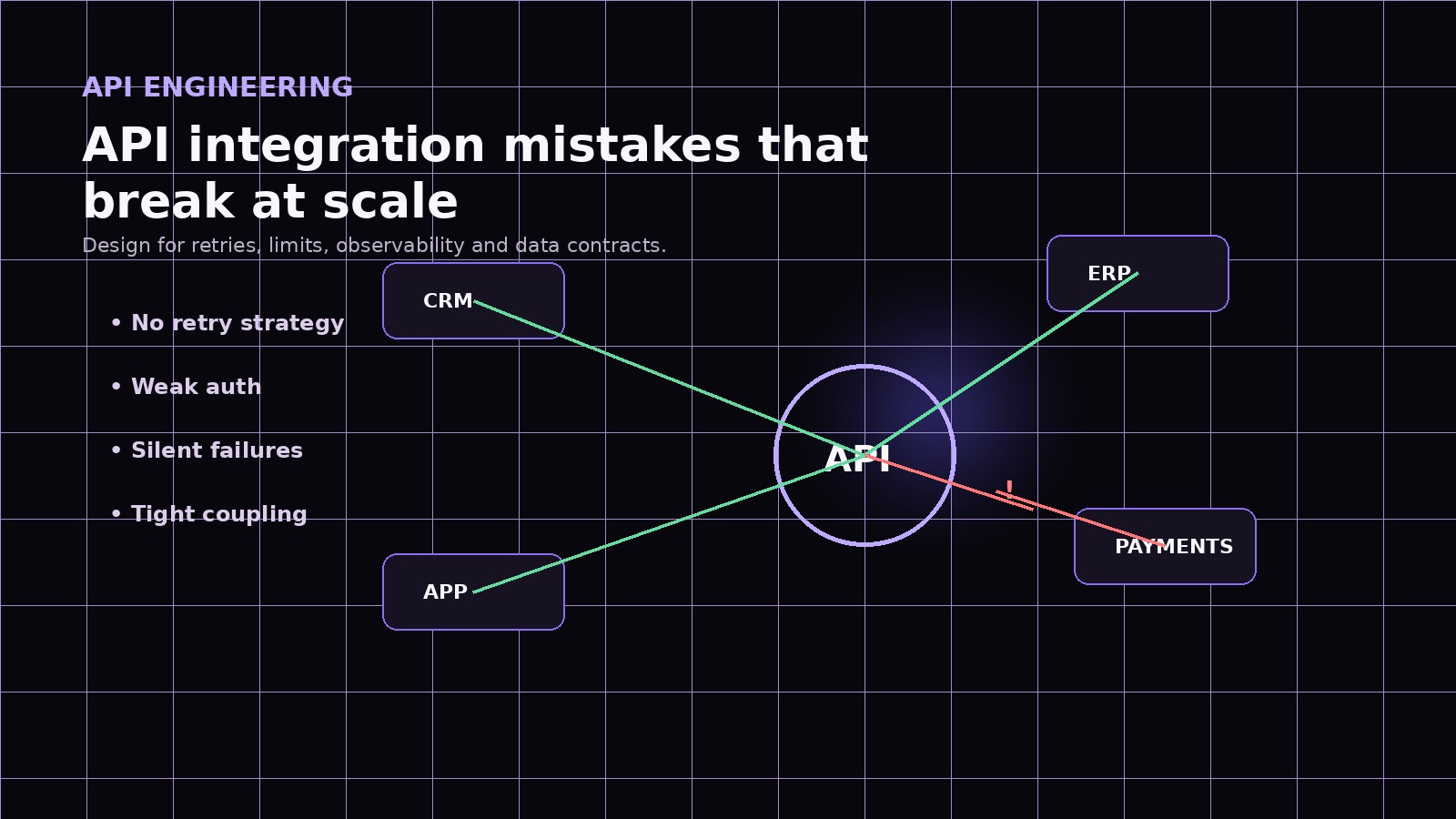
- API integrations
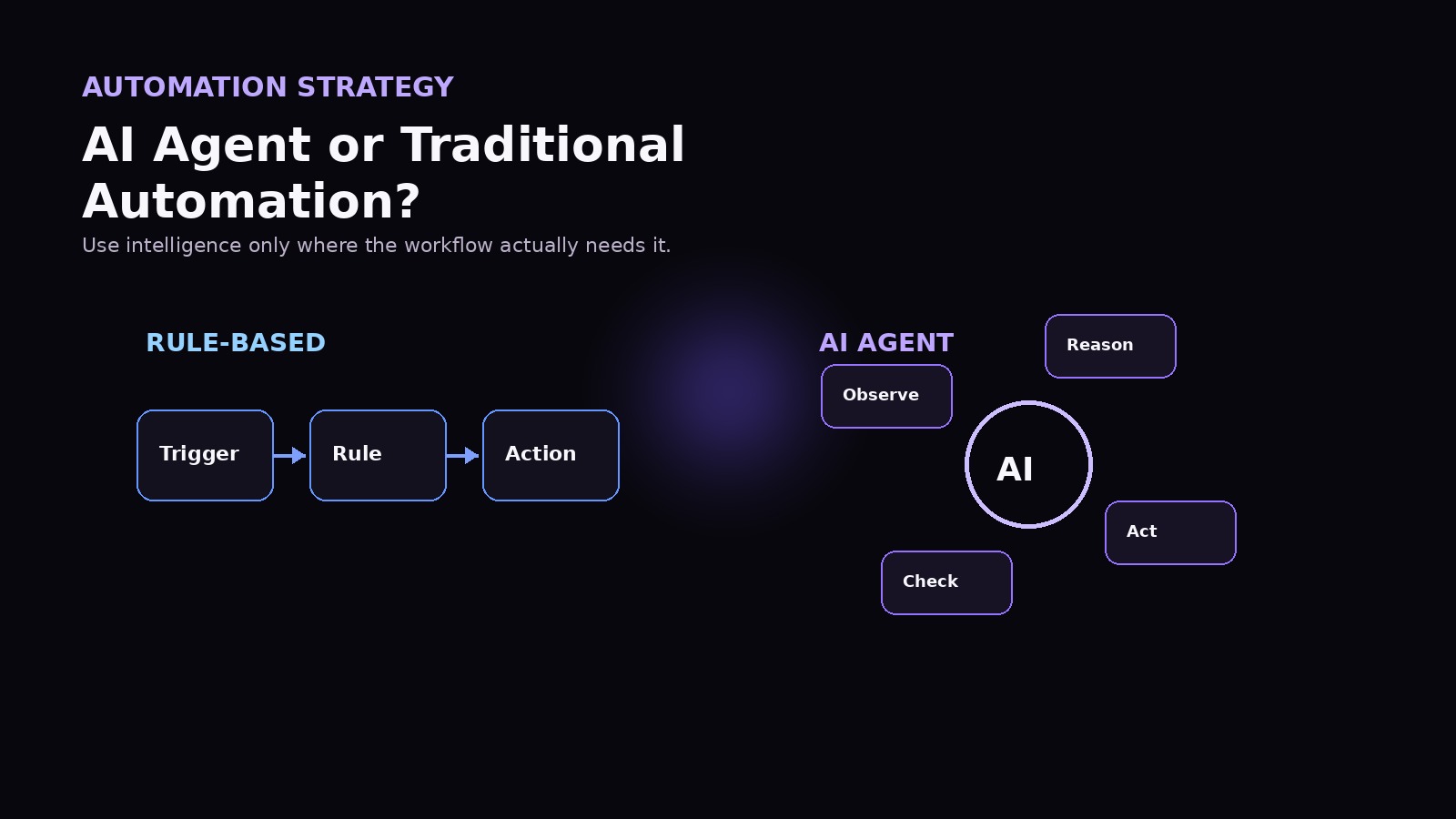
- AI workflows
- High-traffic systems
- Bilingual or regional products
Ask what the team actually delivered inside the project.
4. Understand the delivery process
Software projects change.
A strong process should make change visible and manageable.
Look for:
- Clear milestones
- Regular demos
- Issue tracking
- Defined approval points
- Access to progress
- QA before release
- Change management
- Release planning
Agile delivery does not mean working without a plan.
It means the plan can adapt based on evidence.
5. Look at communication structure
Communication is especially important when working across regions and time zones.
A USA or Canada-based client may work with engineers in Europe, Asia or the Middle East. A GCC client may work with a blended global team.
The relevant question is not whether everyone is in the same city.
It is whether communication is reliable.
Clarify:
- Primary contact
- Response expectations
- Meeting cadence
- Time-zone overlap
- Escalation process
- Documentation
Good remote teams create predictable communication.
6. Compare ownership, not only hourly rates
Two vendors with different hourly rates may produce very different total outcomes.
A lower-cost team may require more client management and rework. A higher-cost team may complete the work with fewer iterations.
Ask who owns:
- Requirements clarification
- Architecture
- QA
- Deployment
- Documentation
- Risk identification
The more responsibilities that fall back on your internal team, the less useful the headline rate becomes.
7. Check how they handle quality
Ask about testing before signing.
Depending on the product, quality practices may include:
- Code review
- Automated tests
- Manual QA
- Cross-browser testing
- Mobile-device testing
- Security review
- Performance testing
- Staging environments
A team should be able to explain its quality process without relying on vague phrases.
8. Discuss security early
Security should not be a final-week task.
For applications handling customer data, payments or business operations, discuss:
- Authentication
- Access control
- Encryption
- Secrets management
- Backups
- Logging
- Dependency updates
- Data retention
If the system serves regulated industries, involve the relevant compliance stakeholders.
9. Ask what happens after launch
Software continues after deployment.
Clarify:
- Warranty period
- Support response
- Maintenance model
- Monitoring
- Hosting ownership
- Documentation
- Knowledge transfer
- Future roadmap process
The ideal partner can support the product without making the client dependent on undocumented knowledge.
10. Use a paid discovery when uncertainty is high
For complex software, a short discovery phase can be more useful than asking five vendors for fixed prices based on incomplete requirements.
Discovery can produce:
- Scope
- User journeys
- Architecture
- Integration plan
- Backlog
- Delivery phases
- Risk assumptions
This makes commercial comparisons more meaningful.
Regional fit matters, but delivery maturity matters more
Businesses in the USA and Canada may prioritize local business-hour overlap, data requirements and integration ecosystems.
Companies in Saudi Arabia, UAE and the wider Middle East may place additional importance on Arabic support, local regulations, payment methods and regional relationships.
These factors matter.
But the strongest signal is still whether the team can consistently turn requirements into reliable software.
Choose the partner that demonstrates ownership, clarity and engineering judgment—not the one that simply has the longest technology list.